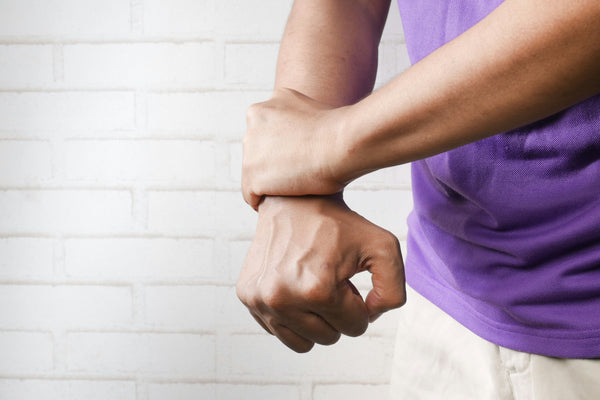
Most people picture joint wear-and-tear as the product of big things — old injuries, intense sports, heavy labor. But often it's the small, repeated habits of ordinary life that quietly add up. The good news: because they're habits, they're changeable. Here are seven worth a second look.
1. Living in a chair
Prolonged sitting is tough on joints in two ways. It keeps your hips and knees locked in one position for hours, and it lets the supporting muscles weaken from disuse. Joints rely on movement to stay lubricated and on strong surrounding muscles to share the load.
The swap: Stand up and move for a couple of minutes every half hour or so. Set a quiet reminder if you need to. It's not the standing that matters so much as breaking up the stillness.
2. Staring down at your phone
The average head weighs about 10 to 12 pounds. Tilt it forward to look at a screen, and the effective load on your neck multiplies dramatically. Hours of this each day — sometimes called "tech neck" — strains the joints of the cervical spine.
The swap: Raise the phone toward eye level instead of dropping your head toward the phone. Your neck will thank you.
3. Carrying a heavy bag on one shoulder
A loaded bag slung on the same shoulder every day pulls your spine and shoulder out of balance, asking one side of your body to compensate constantly.
The swap: Switch sides regularly, lighten the load, or move to a backpack that distributes weight evenly.
4. Wearing unsupportive shoes
Your feet are the foundation for everything above them. Flat, worn-out, or poorly cushioned shoes change how force travels up through your ankles, knees, and hips with every step — and you take thousands of steps a day.
The swap: Choose supportive footwear for the surfaces you spend the most time on, and replace athletic shoes once the cushioning is spent.
5. Skipping the warm-up
Going straight from stillness into vigorous activity asks cold, stiff joints to perform before they're ready. Over time, that abruptness adds unnecessary strain.
The swap: Spend five minutes easing in with gentle, dynamic movement before anything strenuous. It's the cheapest joint insurance there is.
6. Ignoring your core and leg strength
Strong muscles act as shock absorbers, taking pressure off the joints they surround. When the core, hips, and thighs are weak, the joints absorb more force directly.
The swap: A couple of short strength sessions a week — even bodyweight moves like sit-to-stands, wall sits, and gentle squats — build the support system your joints depend on.
7. Carrying extra weight
This is the quiet heavyweight of the list. Every extra pound of body weight translates to several pounds of additional force through weight-bearing joints like the knees with each step. Over a day of walking, that adds up enormously.
The swap: Even modest, gradual changes toward a healthier weight meaningfully reduce the daily load your joints carry. Small and sustainable beats dramatic and short-lived.
Putting it together
You don't need to fix all seven at once. Pick the one or two that describe your daily life most accurately and start there. Joints respond well to consistency — a little more movement, a little more support, a little less strain, repeated day after day.
And remember the foundation beneath all of it: regular gentle motion, strong supporting muscles, a healthy weight, and an eating pattern full of colorful whole foods that supports your body's natural balance. Your joints are built to last a lifetime. A few thoughtful habits help them do exactly that.
This article is for general educational purposes and isn't a substitute for personalized medical advice.